
A toy supplier is safe to order from only when you can match three things on paper before you pay a deposit: the product configuration to a current test report, the quoted MOQ to a written quotation, and the promised lead time to a production calendar that names your press slot. Factory tour photos, WeChat reassurance, and a sample that arrived fast are marketing until they are documented. Run due diligence as an evidence-collection exercise, not a relationship exercise. You are not looking for a factory you like. You are looking for a factory that can hand you a file, a sealed sample, and a written change-control rule for every claim it makes.
This checklist is built for importers, distributors, retailers, and online sellers placing their first or second toy order from China — mainly from the Chenghai and Shantou cluster in Guangdong, or from trading intermediaries in Yiwu. It covers the compliance documents that actually matter (ASTM F963, CPSIA/CPC, EN71 and the Toy Safety Directive 2009/48/EC, RED for radio toys, GPSR), the commercial fields to verify (MOQ, FOB terms, lead time, packaging), and the physical checks that separate a real factory from a reseller with a catalog. Treat every section as a request list: ask, receive, compare, then decide.
Key Takeaways Before You Contact Anyone
- **A Children's Product Certificate is not a factory certificate.** Under CPSC rules, the CPC is product-specific, built on test results from a CPSC-accepted laboratory, and names the applicable rules and responsible parties. If a supplier sends you one CPC and says "we are certified for all our toys," that is a red flag, not a qualification.
- **MOQ is a catalog field, not a commitment.** In the Chenghai/Shantou plastic-toy cluster, listed MOQs commonly sit anywhere from very low trial quantities up to a few hundred pieces per SKU depending on tooling, colour and packaging. Confirm the MOQ for your exact SKU, colour and packaging in a written quotation — not from a product page screenshot.
- **Approve a sealed physical sample, not a photo.** Colour, fit, flash and function drift between the first lot and the second. A sealed golden sample held by QC is the only reference that settles a colour dispute later; photo-only approval fails on the second production run.
- **Lead time hides four dependencies.** Tooling, first sample approval, third-party testing (and any retest), and production-plus-packaging are separate clocks. One total number like "30 days" conceals which one is actually the constraint — and peak-season mould change-overs in the run-up to Q4 shipping eat more lead time than most buyers budget for.
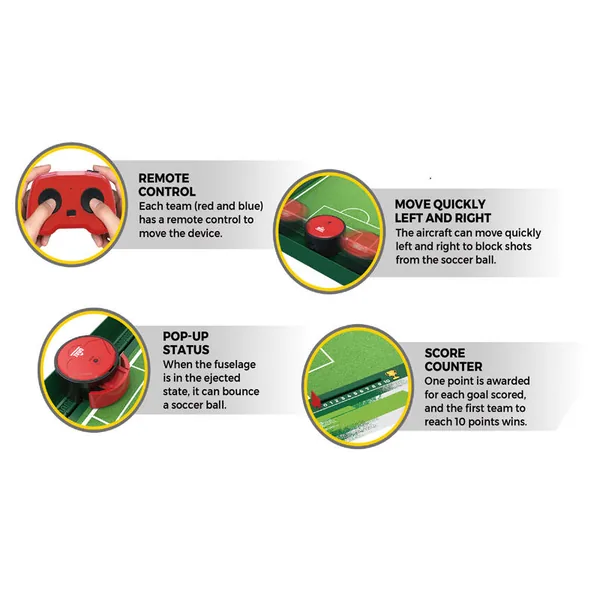
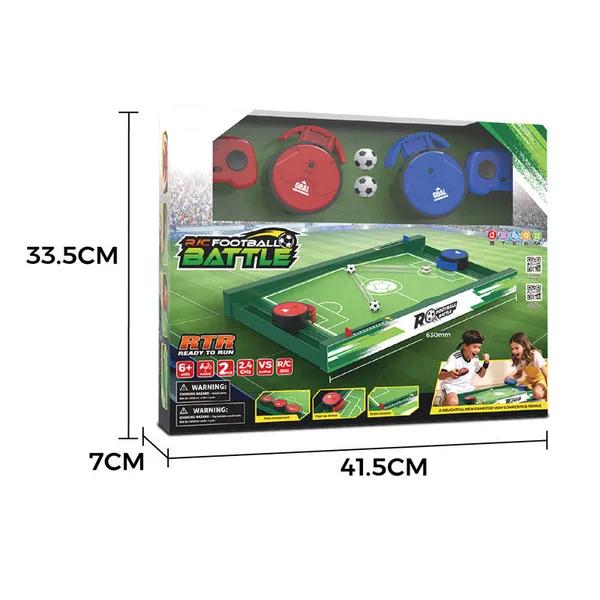
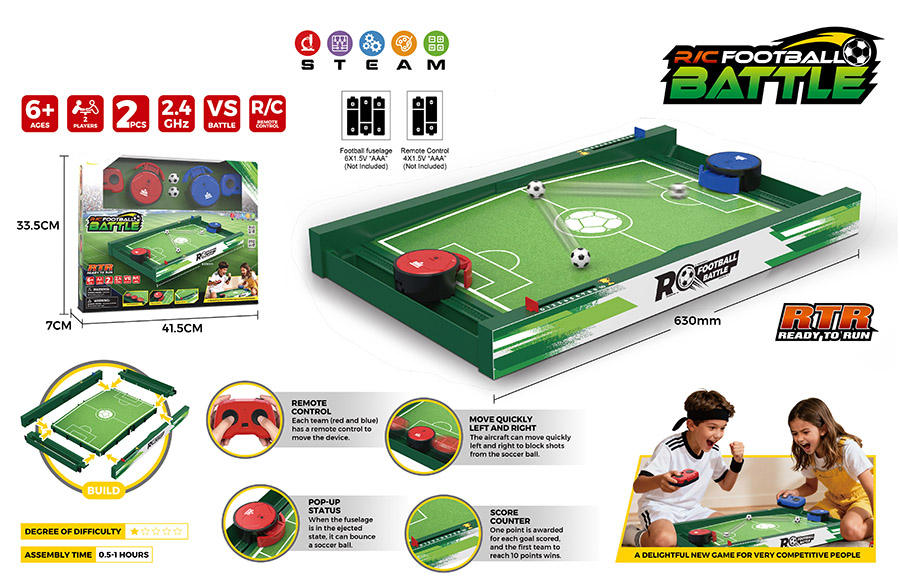
- **Radio-controlled and electronic toys add a compliance layer.** In the EU, RED covers radio equipment and includes electromagnetic-compatibility requirements plus strengthened traceability obligations for manufacturers, importers and distributors — so an RC car or walkie-talkie needs EMC evidence on top of toy-safety testing.
Which Documents Should a First-Time Toy Importer Request From a Supplier?
Request a document pack, not a document. The minimum set for a toy SKU is: a test report from an accredited or CPSC-accepted laboratory that identifies the product configuration, age grade and standard edition; the conformity document for the destination market (a Children's Product Certificate for the US, or an EU Declaration of Conformity plus CE marking for the EU); the packaging artwork and label proof; and a written quotation naming MOQ, unit price, Incoterm, lead time and payment terms.
Then check that each document matches your SKU. A test report for a 3+ age grade does not cover a product you will label 0+. A report that names a different colour, battery configuration, or accessory set does not cover the version you are buying. Under 16 CFR Part 1250, ASTM F963 is incorporated by reference, and the applicable edition should be read from the current regulation before anyone quotes a report — so ask the supplier to state the edition on the report itself.
For the EU, the Toy Safety Directive 2009/48/EC sets the essential safety requirements for toys placed on the market, and CE marking plus an EU Declaration of Conformity belong to that conformity process — matched to the product scope. Keep the General Product Safety Regulation (EU) 2023/988 in a separate mental folder: it is a different legal instrument from the Toy Safety Directive, and importer, manufacturer and product-identification information must be mapped to your actual market role.
One more document that gets ignored until it becomes a problem: the tracking label. Tracking information should be permanent and support product identification where applicable, which means packaging, product markings and lot control have to be reviewed as one system, not three. If your supplier cannot show you where the tracking label sits on the moulded part or the packaging, you have found your first open question.
Due-Diligence Checklist: What to Request vs. What to Verify
| Product configuration & age grade | Request: SKU spec sheet with dimensions, material, battery/accessory list, age grade. Verify: the spec matches the test report and the packaging claim exactly. |
|---|---|
| Test report (US) | Request: report from a CPSC-accepted laboratory citing ASTM F963 edition and applicable rules. Verify: product configuration, age grade and edition on the report match your SKU. |
| Children's Product Certificate (US) | Request: CPC based on the test results, naming applicable rules and responsible parties. Verify: it is product-specific, not presented as a blanket factory certificate. |
| EU conformity (EN71 / TSD) | Request: EU Declaration of Conformity and evidence of CE marking process. Verify: matched to product scope and the current consolidated text of Directive 2009/48/EC. |
| Radio / electronic toys (EU) | Request: EMC evidence under the RED framework. Verify: traceability obligations for manufacturer, importer and distributor are assigned in writing. |
| General product safety (EU) | Request: confirmation of how GPSR (EU) 2023/988 duties are handled separately from toy-safety duties. Verify: importer and manufacturer identification appear on the product or packaging. |
| Tracking label | Request: artwork showing the permanent tracking mark and lot code position. Verify: packaging, product marking and lot control are reviewed together. |
| Small parts & detachable components | Request: assessment of detachable accessories and packaging components against the age grade. Verify: assemblies and accessories get the same review as the main product. |
| MOQ & quotation | Request: written quotation naming MOQ per SKU, colour and packaging. Verify: the quoted MOQ matches the SKU you actually want, not a catalog default. |
| Lead time breakdown | Request: a schedule separating tooling, first sample, testing, production, packaging and shipping. Verify: peak-season freeze dates and change-over hours are written, not verbal. |
| Sample approval | Request: sealed golden sample retained by QC with your approval signature. Verify: bulk is compared to that physical piece on colour, fit, flash and function. |
| Line clearance & change control | Request: written procedure for clearing labels, colours and work instructions between SKUs. Verify: the supplier can describe what happened the last time a mixed label nearly shipped. |
| Factory audit | Request: current third-party audit report or willingness to host one. Verify: the audited legal entity name matches the entity on your quotation and invoice. |
| Order mix capability | Request: examples of multi-SKU or mixed-container orders with packaging photos. Verify: whether your SKU mix can fill CBM without generic unbranded filler. |
How Do You Verify a Chinese Toy Supplier Without Flying There?
Verification is a paper trail plus one physical object. Start with entity matching: the company name on the quotation, the bank account, the business licence, and the audit report must all point to the same legal entity. A mismatch between the trading name you email and the beneficiary on the wire transfer is the most common structural weakness in first orders — and the hardest to unwind after a deposit.
Second, order a paid sample. Not a free sample couriered for goodwill, but a sample you pay for, at the quoted MOQ price, in the packaging you intend to sell. Then inspect it against the spec sheet: does the material match, does the age grade on the box match the test report, does the battery configuration match the EMC evidence? A supplier who cannot produce a paid sample in retail packaging is a supplier who has not confirmed your configuration.
Third, ask for the golden sample process in writing. In practice at a Chenghai injection-moulding plant, the argument that ends a colour dispute is the sealed golden sample on the QC shelf, not an email thread — bulk is compared to that physical piece on colour, fit, flash and function. Ask your candidate supplier: who holds the sealed sample, where is it stored, and who signs off bulk against it? A vague answer here predicts a vague second lot.
Fourth, test the change-control story. Line clearance is unglamorous until a mixed label reaches a retailer: a new SKU that starts with the previous SKU's labels still in the hopper has to trigger a full stop, label and colour clearance, and a restart against written work instructions. Ask what their procedure is, and ask for one real example of it being triggered. Suppliers who have never had a near-miss either run a very tight shop or have not looked.
Fifth, verify the audit — or commission one. A third-party social and technical audit report is only useful if it is current, covers the entity you are paying, and covers the process you are buying. If your product involves an outsourced process (plating, printing, electronics assembly), that process needs the same material, sample, inspection, change-control and traceability requirements as an in-house step. An audit that stops at the factory gate does not cover it.
Finally, keep a written open-questions list. Every field your supplier cannot answer — a missing material declaration, an unclear age grade, a report edition nobody will confirm — is a due-diligence finding, not a footnote. A first-time importer who catalogs five open questions and closes four of them is in better shape than one who accepts a polished PDF and stops asking.
What MOQ and Lead-Time Posture Should You Expect From Chenghai and Shantou Factories?
Chenghai, inside Shantou in Guangdong province, is a dense toy-manufacturing district: injection moulding, tooling, assembly and packaging sit within a short drive of each other, which is why buyers treat it as a cluster rather than a single factory address. Yiwu, by contrast, functions more as a trading and small-commodity market — useful for mixed-category consolidation, less useful when you need to see the press your mould runs on.
That ecosystem shapes commercial posture. Tooling is the fixed cost, so MOQ is really a question of how many shots a supplier needs to amortize a mould, a colour run, and a packaging print run. A simple plastic SKU with existing tooling can be quoted at trial quantities; a new mould, a custom colour, or a bespoke blister card pushes MOQ up. In the supplied catalog of plastic toys — RC battle cars, STEM building sets, water and sand tables, drawing tables, walkie-talkies, fidget and clay sets — listed MOQs range from single-digit trial units to around 180 pieces depending on the SKU, material and packaging. Treat those as catalog fields to confirm in a quotation, never as a commitment.
Lead time behaves the same way. A total number is meaningless unless it is decomposed: tooling days, first-article sample approval, third-party testing turnaround, production, packaging, and booking. Peak season is where this breaks. Mould swaps during the run-up to peak shipping consume capacity, and a verbal "quick colour change" in September has missed more vessels than steel problems ever have — which is why a serious supplier will write the freeze date, the change-over hours, and which job is on the press, instead of quoting a single friendly number.
One data point from the same cluster, offered as an example among many: a mixed-container importer completing 20GP/40HQ loads needed high-turnover filler to finish CBM alongside outdoor goods, and generic unbranded filler made the retail story harder to tell. That is a legitimate sourcing pattern, and it is worth asking any candidate supplier whether they can support a multi-SKU order with branded packaging rather than anonymous filler — but it is your question to ask of every factory, not a reason to skip the others.
What Distinguishes a Factory From a Trading Company — and Does It Matter?
It matters for exactly three things: change control, traceability, and who answers when something goes wrong. A factory that owns the mould, the press and the QC bench can change a colour, freeze a run, or re-shoot a batch on its own authority. A trading company has to relay that request to a third party, and every relay adds a day and a version of the truth.
That does not make trading companies useless. For a first order with a mixed category — a few RC cars, a few building sets, some walkie-talkies — a consolidator who already holds stock or existing tooling relationships can get you to a container faster and with less tooling risk than commissioning a new mould. The trade-off is visibility: you often cannot audit the line that actually produced your goods, and outsourced processes may sit outside the audit scope entirely.
The way to tell them apart without a factory tour is to ask three specific questions. Who owns the mould for this SKU? Which legal entity will appear on the invoice? And can I see the line clearance record for the last change-over on this product? A factory answers all three in specifics. A trader answers the first two vaguely and deflects the third. Neither answer is automatically disqualifying — but the answer you get should change how much deposit you are willing to risk.
Which Certifications and Standards Apply to Your Destination Market?
Match the standard to the market, not to the supplier's marketing. For the United States, children's toys generally require testing at a CPSC-accepted laboratory and a Children's Product Certificate, and 16 CFR Part 1250 incorporates ASTM F963 by reference — so the report should identify the product configuration, age grade and standard edition, and the applicable edition should be read from the current regulation before a report is quoted. A CPC is product-specific and should never be described as a blanket factory certificate.
For the European Union, the Toy Safety Directive 2009/48/EC sets the essential safety requirements for toys placed on the market, and CE marking plus an EU Declaration of Conformity belong to the conformity process and must be matched to the product scope. Keep the GPSR separate: Regulation (EU) 2023/988 is a different legal instrument, and importer, manufacturer and product-identification information should be mapped to the relevant market role before you publish anything on packaging.
Age grading and small-part risk travel together. A product with detachable accessories, or packaging components a child could mouth, needs the same assessment discipline as the main toy — assemblies and detachable accessories should not be waved through because the hero product passed. If your SKU is radio-controlled or electronic, add the RED framework on top: it includes electromagnetic-compatibility requirements for radio equipment and strengthened traceability obligations for manufacturers, importers and distributors.
The honest boundary: no standard, guidance page, or audit framework is a claim that a specific factory or SKU is certified. Only the report, the certificate, and the responsible party named on them can do that — and only for the configuration they describe. A remote-control car listed in a supplier catalog with a plastic body and a stated MOQ tells you nothing about its EMC status until you see the evidence.
FAQ: Toy Supplier Due Diligence for First Orders
What is the minimum due-diligence pack I need before paying a toy supplier a deposit?
You need four items: a written quotation naming SKU, MOQ, unit price, Incoterm and lead time; a test report from an accredited or CPSC-accepted laboratory that identifies your product configuration and age grade; the conformity document for your destination market (CPC for the US, EU Declaration of Conformity plus CE marking for the EU); and a paid sample in retail packaging. If any of the four is missing, treat the deposit as premature until it is resolved.
Can a supplier send one CPC that covers all their toys?
No. A Children's Product Certificate is product-specific, is based on testing results, and identifies the applicable rules and responsible parties. It should never be described as a blanket factory certificate. Ask for the CPC that matches your exact SKU, colour, battery configuration and age grade — a certificate for a different configuration does not cover yours.
How do I confirm the MOQ is real and not just a catalog number?
Get the MOQ written into the quotation for your exact SKU, colour and packaging, then compare it against what the supplier says about tooling. MOQ is driven by mould amortization, colour runs and packaging print runs, so a quoted MOQ that seems too low for a custom colour or new mould should be challenged in writing before you plan the order.
What should I ask about lead time before peak season?
Ask for a decomposed schedule: tooling, first-article sample approval, third-party testing, production, packaging and shipping as separate lines. Then ask for the freeze date, the change-over hours, and which press job is assigned to your order. A single total lead-time number that does not mention peak-season mould swaps is not a schedule — it is an estimate.
Do I need a factory audit for a first small order?
Not always, but you need entity matching either way. Confirm that the business licence, quotation, bank beneficiary and any audit report all name the same legal entity, and ask whether any process in your product is outsourced — outsourced steps need the same material, sample, inspection and traceability controls as in-house ones. For a first order under a few hundred units per SKU, a paid sample plus document matching covers most of the risk.
How do I handle a radio-controlled or battery toy differently?
Add EMC evidence to the standard toy-safety pack. In the EU, the RED framework covers radio equipment and includes electromagnetic-compatibility requirements plus strengthened traceability obligations for manufacturers, importers and distributors, so an RC car or walkie-talkie needs evidence beyond EN71. Confirm in writing which party holds the EMC report and which party's name appears on the product as importer or manufacturer.
What is the single biggest due-diligence mistake first-time importers make?
Approving a sample from a photograph. Colour, fit, flash and function drift between production lots, and a photo cannot settle a dispute six weeks later. Approve a sealed physical golden sample, confirm who holds it at the factory, and require bulk to be compared against that physical piece before shipment.
Sources
Related Products & Categories
Ready to Run This Checklist Against a Real Quotation?
Send us your SKU list, destination market and target order volume, and we will return a written quotation with the MOQ, lead time breakdown and document pack for each item — plus a paid sample in your intended packaging so you can verify it against the spec sheet before committing. If you would rather see the operation first, ask about a factory audit visit or a third-party audit arrangement in Chenghai. Either way, start with the evidence, not the price.