
The fastest way to find out what a toy supplier can actually do is to stop asking what they make and start asking how they prove it. Capability shows up in four places: a sealed physical golden sample on the QC shelf, a written peak-season freeze date with change-over hours, a line-clearance procedure between SKUs, and a compliance file that matches one market, one lot, and one test scope. Ask for those four and most trading offices stall within a week.
This page is a question framework, not a vendor list. Use it to score any factory in Chenghai, Shantou, or elsewhere in Guangdong before you place a deposit — and to decide whether the answers you get are evidence or marketing.
Key Takeaways
- A supplier who cannot produce a sealed, dated golden sample for the exact SKU you are buying has no anchor for bulk comparison — photo-only approval typically fails on the second production lot.
- Peak-season lead time is a scheduling question, not a courtesy question. Ask for the mould-swap freeze date, the change-over hours, and which press the job sits on; a verbal "quick colour change" in September is how containers miss vessels.
- Certification questions must name the market, the SKU, and the lot. A CPC is product-specific and identifies the applicable rules and responsible parties, so treat it as a document to read, not a badge to accept.
- Uniform MOQ assumptions are wrong in both directions: listed MOQs across toy SKUs commonly range from single digits to several hundred pieces per model, and MOQ for customization is a separate negotiation from MOQ for stock.
- The strongest tell is line clearance: whether the factory stops the line, clears previous labels, colours, and work instructions, then restarts — or simply runs your SKU behind the last one.
What should I ask before I trust a factory's product range?
Ask three things about every SKU you shortlist: the material grade, the age grading, and the exact configuration that was tested. Material labels alone — plastic, PVC, ABS, wood — say nothing about safety or durability, and a product record that lists only a material name is a starting point, not a specification.
Push for the tested configuration. A remote-control car sold with a detachable accessory, a battery pack, or alternate wheels can be a different tested article than the base model. Under the U.S. framework, the applicable edition of ASTM F963 and the incorporated regulatory status should be read from the current regulation before you quote a report — and 16 CFR Part 1250 is where that mapping lives.
Then ask the commercial question that most buyers forget: is this SKU actually produced in-house, or bought in finished? The answer changes your QC leverage, your customization ceiling, and your lead time. A trading office can sell you the same item; it cannot give you a freeze date on a press it does not own.
How do I test a supplier's QC discipline in one email?
Ask for the golden sample procedure. In Chenghai, the argument that ends a colour dispute is the sealed physical piece on the QC shelf — not an email thread. Bulk is compared to that piece on colour, fit, flash, and function. Buyers who approve only a photo routinely pay for it on the second lot, when the colour drifts and there is no approved reference to hold anyone to.
Second question: describe your line clearance between SKUs. A factory that has ever shipped mixed labels knows the answer by heart — you stop the line, clear labels, colours, and work instructions, then start the new job. If the reply is vague, assume the previous SKU's labels are still in the hopper.
Third: define the lot. A production lot should be traceable to a defined product model, material or component lot, process window, and production time range. If your supplier cannot define a lot, they cannot isolate a defect or support a recall — and your tracking label requirement has nowhere to attach.
These three questions cost you one email and eliminate most of the field.
What a capability claim looks like versus what evidence looks like
| Claim: "We have EN71 / CPC / CE" | Evidence: a report naming the product configuration, age grade, standard edition, testing date and place, and the lab that ran it — read against the current regulation for your market |
|---|---|
| Claim: "Our MOQ is flexible" | Evidence: a written MOQ per SKU plus a separate MOQ for customization, colour change, and packaging change — matched to your order plan |
| Claim: "Lead time 25-35 days" | Evidence: a base lead time plus a peak-season note stating the mould-swap freeze date, change-over hours, and the press schedule |
| Claim: "We check quality" | Evidence: a named inspection stage (in-production and final), who signs off, and the sealed golden sample the bulk was compared against |
| Claim: "We export to many countries" | Evidence: which compliance file covers which destination market and which lot — the GPSR importer/manufacturer role mapping is a separate exercise from the Toy Safety Directive |
| Claim: "We are a factory" | Evidence: who owns the moulds, who runs the press, and whether your freeze date is written by the person scheduling that press |
| Claim: "We can customize" | Evidence: scope of OEM/ODM in writing — logo, colour, packaging, mould ownership, and who holds the IP |
| Claim: "Small parts are fine for this age" | Evidence: age grading and small-part risk assessed for the actual product configuration, including detachable accessories and packaging components |
Which MOQ questions actually change your order plan?
Ask MOQ per SKU, not per supplier. Across toy categories, listed minimums commonly span from a handful of pieces on some models to several hundred on others — a single "our MOQ is X" answer is almost always a simplification that collapses when you place a mixed order.
Then separate the three MOQs that matter commercially: stock MOQ for an existing item, MOQ for a colour or logo change, and MOQ for new packaging or a new mould. These are different numbers with different lead times attached, and only the first one is usually published.
Finally, tie MOQ to cash flow rather than to unit price. A low MOQ on a slow-moving SKU locks up working capital just as effectively as a high MOQ on a fast one. If you are completing a mixed container, the filler SKUs need to turn — an unbranded filler item that undercuts your retail story is a false economy.
How do compliance questions expose a weak supplier?
Ask which file covers which market, and watch whether the answer is a document or a sentence. Under the U.S. framework, children's toys generally require testing at a CPSC-accepted laboratory and a Children's Product Certificate — a CPC is based on test results and identifies the applicable rules and responsible parties, and it is product-specific, not a blanket factory certificate.
In the EU, the Toy Safety Directive 2009/48/EC sets the essential safety requirements, with CE marking and an EU Declaration of Conformity matched to the product scope. The General Product Safety Regulation (EU) 2023/988 is a separate instrument, and importer, manufacturer, and product-identification information should be mapped to your market role before you publish anything on a label.
The tell is mismatch. A UKCA file and a VOC report on an electric toy are different papers; a buyer who tries to use one certificate for both is holding two problems. Paperwork that does not match the lot is not paperwork. Ask your supplier to map market, lot, and which file covers which test — in writing, per SKU.
One more: tracking labels. Tracking information should be permanent and support product identification where applicable, which means packaging, product markings, and lot control get reviewed together. If the supplier cannot say where the tracking label goes and what lot code it carries, the compliance conversation is not finished.
What does a peak-season answer reveal about a supplier?
Peak-season mould swaps eat lead time, and the damage is invisible on a quotation. A verbal "quick colour change" in September has missed more vessels than steel problems ever have. The capable factory writes the freeze date, the change-over hours, and which job is on the press — and can tell you what happens to your order if a mould swap overruns.
Production lead time without peak notes is fiction. So ask the scheduling question directly: when is my colour frozen, how many hours does the change-over take, and what is behind my job in the queue? A supplier who answers in days rather than in the language of presses and moulds is quoting you a wish.
Then walk the sample through the same logic. A working sample shipped in low season tells you almost nothing about a September reorder, which is exactly when most Western retail programmes need the second lot.
Which questions expose communication and accountability gaps?
Ask who owns the answer when something changes. Who signs the freeze date? Who stops the line on a label error? Who holds the golden sample, and who signs off when bulk is compared to it? Who maps the compliance file to the lot? Four roles, four names.
If the same person owns all four, you are dealing with a small operation — that can be an advantage in speed and a risk in coverage during peak weeks. If nobody owns them, you are dealing with a sales channel.
The practical test: send one written change request — a colour tweak or a packaging wording edit — and time the response. The quality of that reply, not the catalogue, is what your production run will feel like.
How does supplier evaluation differ across Chenghai, Shantou, and Yiwu?
Chenghai, in Shantou, Guangdong, is a dense plastic-toy manufacturing cluster: moulds, injection, assembly, and packaging sit within a short drive of each other, which compresses iteration time on a new SKU. The trade-off is that cluster density also creates a long tail of small workshops and trading intermediaries presenting as factories — which is why the golden-sample and press-scheduling questions matter more here than a showroom visit.
Shantou more broadly adds packaging, printing, and ancillary suppliers, useful when your customization runs to cartons and inserts rather than just the product. Yiwu, by contrast, is a trading and small-commodity hub: excellent for mixed, low-volume, fast-turnaround sourcing and for completing a container, weaker for process control on a specific moulded SKU. Choose Yiwu when assortment breadth is the constraint; choose Chenghai or Shantou when process control on a defined product is the constraint.
None of these locations is a certification. A cluster tells you what skills are nearby, not what a given factory can prove.
How do I verify a Chinese toy supplier before paying a deposit?
Run the paper trail first: business licence and legal name against the bank account, the entity that appears on the compliance documents, and the entity issuing the invoice. Mismatches here are the cheapest fraud signal you will ever get.
Then request documents, not descriptions: the test report for your exact configuration and age grade, the CPC where applicable, the EU Declaration of Conformity matched to product scope, and the tracking-label plan. Read the report for product configuration, age grade, and standard edition — a report that does not identify these cannot be tied to your SKU.
Then verify physically: a sealed golden sample in your hands before bulk, a third-party pre-shipment inspection on the first order, and a defined lot on the carton. If you are auditing on-site, watch the changeover between two SKUs rather than the showroom — that is where capability lives.
Finally, treat every self-reported number with the same discipline. Facility size, headcount, delivery rate, response time, and client lists are claims until a document, a date, or a third party substantiates them. A verified-supplier badge dated on a specific day is a starting point for questions, not an answer.
FAQ
What is the single most revealing question to ask a toy supplier?
Ask for the sealed golden sample and the procedure for comparing bulk to it. A factory with a dated, sealed reference piece on the QC shelf has a physical standard for colour, fit, flash, and function; a supplier who can only send photos has no anchor when the second lot drifts.
Can a supplier's EN71 or CPC certificate prove their factory capability?
No — a certificate proves a product, not a factory. A CPC is based on test results, identifies the applicable rules and responsible parties, and is product-specific, so it is not a blanket factory certificate. A report must match the product, age grade, material, and test edition; read it against the current regulation for your destination market before relying on it.
How do I know if a quoted lead time is realistic for peak season?
Ask for the mould-swap freeze date, the change-over hours, and which press the job sits on. Peak-season mould swaps eat lead time, and a verbal promise of a quick colour change in September has missed more vessels than steel problems — production lead time without peak notes is fiction.
What MOQ should I expect from a Chenghai or Shantou toy factory?
Expect wide variation by SKU rather than one factory-wide number, with listed minimums commonly spanning from single digits to several hundred pieces per model. Confirm three separate figures in writing: stock MOQ, MOQ for a colour or logo change, and MOQ for new packaging or a new mould.
Is it worth paying for a third-party inspection on a first toy order?
Yes, on the first order and on any new SKU. The inspection should be tied to a defined lot — a production lot traceable to a product model, material or component lot, process window, and production time range — so a defect can be isolated rather than absorbed.
How do I check that compliance paperwork covers my exact product and market?
Ask the supplier to map market, lot, and which file covers which test, then verify the report names the product configuration, age grade, standard edition, and test dates and places. In the EU, CE marking and the EU Declaration of Conformity must match the product scope, and the GPSR is a separate instrument from the Toy Safety Directive.
Sources
Related Products & Categories
Request a quote or a factory audit
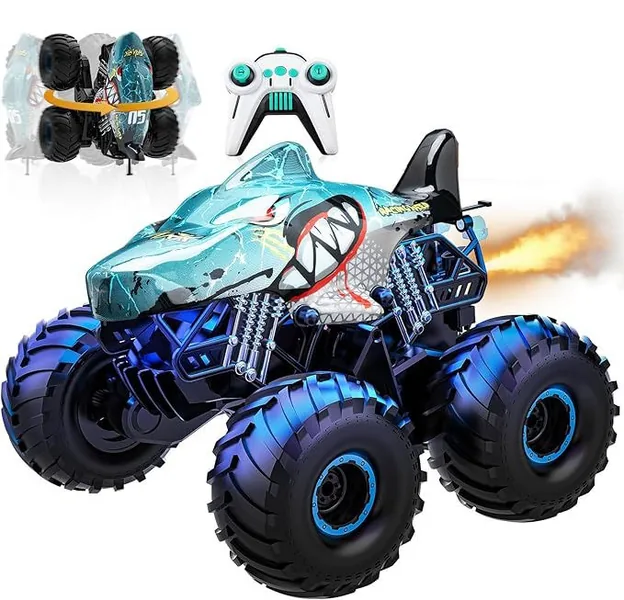
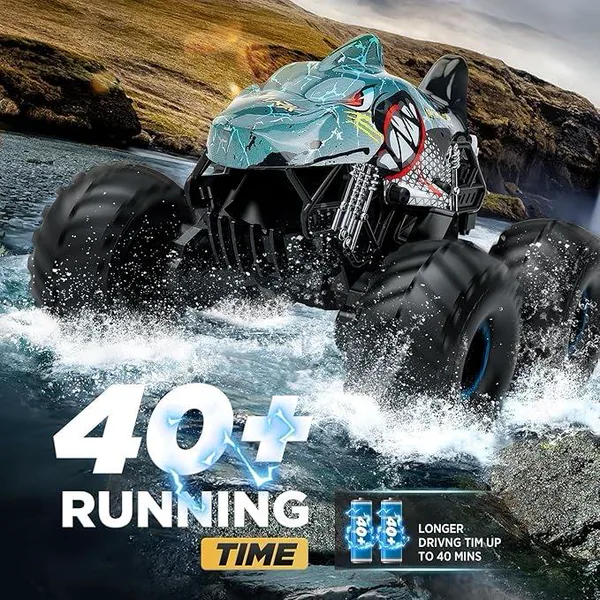
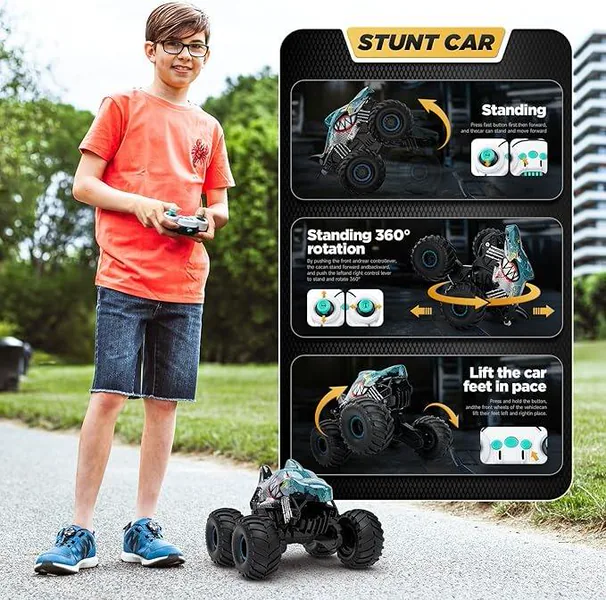
If you want to run this question framework against a real Chenghai production line, start with a product. A compact RC car programme such as the mini alloy off-road remote control car, or the remote control shark car with spray and light-up functions, gives you a concrete SKU to test the four questions on: golden sample, peak-season freeze date, line clearance, and compliance scope mapped to your market. Send us your target SKU, destination market, and order plan, and we will answer in documents rather than adjectives.